

Black History - Letter to myself
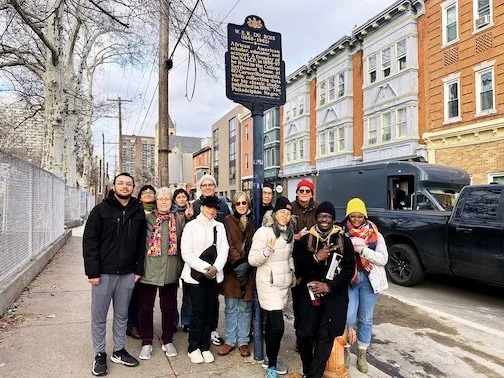
Members of the Rise up for Reparations cohort and guests on the 1838 Black Metropolis tour.
by Stephanie Zhong
Before I became a brand storyteller, I was an interior architect and designer.
Architecture was a love I shared with my mom. Years ago, we took a historic architecture tour of Philadelphia. We visited the Betsy Ross home and stood in rooms where the founding fathers once met in secret.
What I remember most was something almost trivial and fascinating to me at the time...
Why are Philadelphia’s historic row homes so narrow in the front?
Answer: because property taxes were once based on the width of the front.
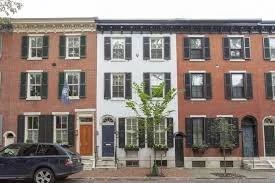
Row homes in Philly
So people built deep instead of wide.
Even then, I was captivated by how people use design to respond to power — and how architecture quietly reveals what a society values...and what it tries to avoid.
I remember running my hands along centuries-old brick, imagining the hands that laid them. I felt connected to those early architects of a nation — even knowing the story was romanticized.
After all, if not for that history (and its deeply problematic colonialist and imperialist past), I wouldn't have been born here.
But that tour missed another story of freedom makers across town.
In 1838, Philadelphia had the largest population of free Black people in the United States.
A self-sustaining ecosystem of education, medicine, commerce, church, and community care. A living architecture of freedom.
Last Saturday, my husband and I went on the Black Metropolis tour and got to walk those cobblestone streets and learn about this city within a city.
We touched brick walls where Harriet Tubman first stepped into freedom. Where W.E.B. Du Bois wrote The Philadelphia Negro. Where, at one time, a very wealthy person in the city was a Black female dressmaker.
Our guide described the intentionally designed support system that met enslaved people arriving alone in a “free” city — with care, clothing, work, healing, belonging.
This was architecture at a higher level.
Not of buildings, but of community.
Not just freedom for some, but liberation for all who came.
As we approach the 250th anniversary of the nation’s founding, I’m in awe of the early Black leaders who engineered ecosystems that addressed the holistic needs of people arriving into freedom.
One story has been enshrined and mythologized in textbooks.
The other remained hidden until people devoted themselves to reveal it.
I’ve always been drawn to the stories we can’t see. Maybe that’s why storytelling became my work.
If you ever find yourself in Philadelphia, I cannot recommend the Black Metropolis tour enough.
And if you’re building something that feels bigger than you and struggling to be visible, may we remember not to go it alone.
May we reach out for help.
Help each other rise.
And create ecosystems of care for one another.
Note: Shoutout to Lucy Duncan and repWorks for organizing the tour. And to my friend, client and co-conspirator Alli Myatt, whose annual Black History Month series on LinkedIn awaken me to stories of Black luminaries rarely taught. I highly recommend following her work.
Stephanie Zhong is a member of Tabernacle United Church and their reparations committee. She is a brand alchemist and Human Design leadership coach who helps purpose-driven entrepreneurs, coaches and leaders turn their brilliance into a movement-worthy message that grows their visibility and impact.